
How Many Days Can Solar CCTV Cameras Operate Without Sunlight in Rainy Season?
As a homeowner or business owner in Gauteng, you may wonder: “When the skies turn grey during winter or the rainy season — how long can a solar CCTV camera keep running without sunlight?” This is a key question in designing a reliable security system, especially when relying on solar‑powered surveillance from Accend Security. In this post, I break down the factors that affect autonomy — battery capacity, panel sizing, and realistic expectations during South African winters — so you can plan surveillance coverage that doesn’t fail when weather turns.
🌤️ How Solar CCTV Works — Battery + Solar Panel + Smart Management
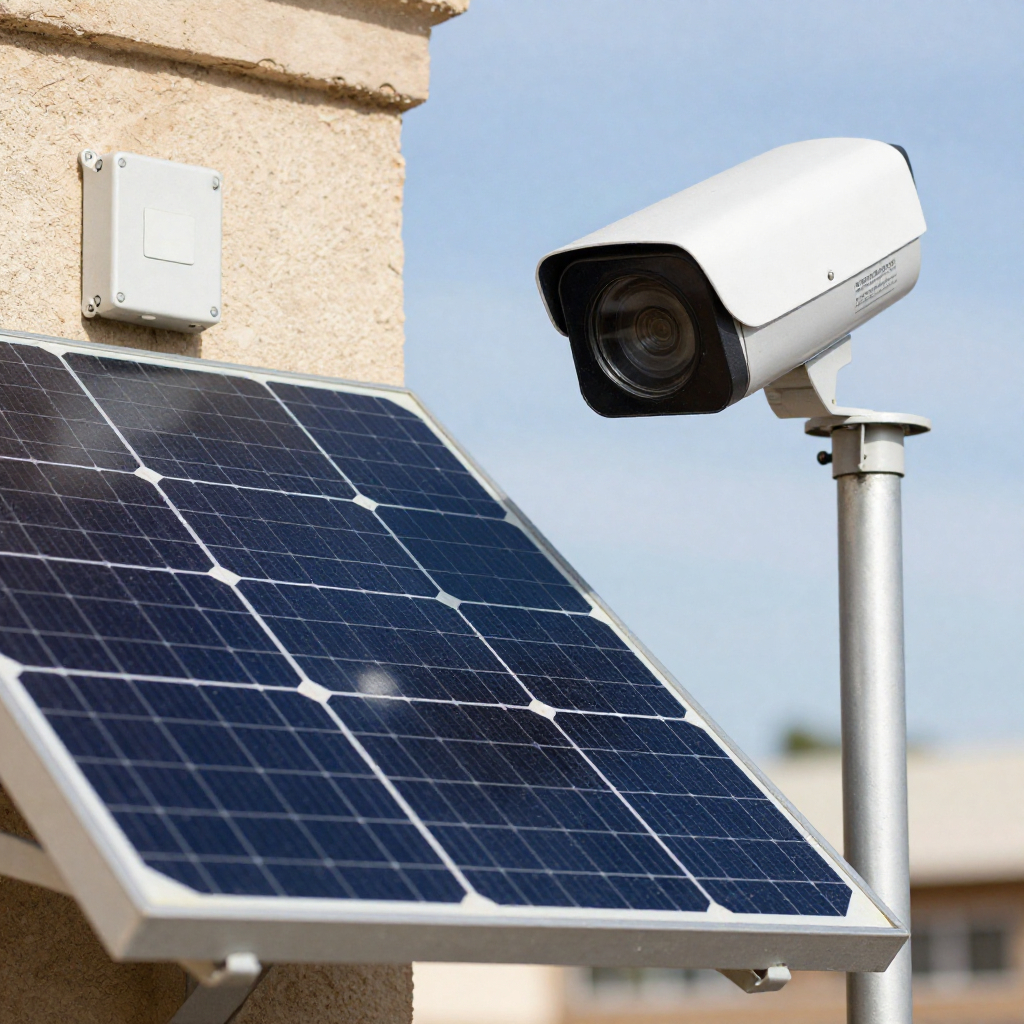
Solar CCTV cameras integrate three main elements: solar panels, rechargeable batteries, and intelligent power management.
-
The solar panel converts sunlight (direct or diffused) into electricity. Even on cloudy or rainy days, the panel can produce some power (though reduced)
-
The battery stores excess electricity generated during sunny periods. When sunlight is insufficient, the camera draws from stored energy — enabling night‑time recording and operation during overcast days or load shedding.
-
Smart power management — modern solar CCTV systems reduce power consumption when little light is available: adjusting frame rates, switching to motion‑triggered recording, or lowering power usage during idle times. A Top Security Camera Manufacturer+1
At Accend Security, we link solar CCTV solutions with PV solar installations and backup systems, ensuring a robust setup for households or businesses in Randburg, Roodepoort or wider Gauteng. Accend Security+1
Battery Capacity, Panel Sizing & Autonomy: What Works in South Africa’s Winter
Typical Battery Sizes & What They Mean
Many quality solar CCTV cameras use batteries in the 5,000 mAh to 8,000 mAh range. Mid‑range systems with such batteries can generally run for 2–3 days without sunlight, assuming average usage. High-capacity models — or units with larger battery banks — may last up to a week on a full charge without additional solar input.
In fact, some commercial solar CCTV systems marketed in South Africa advertise up to seven days of operation without direct sunlight.
Panel Output & Sunlight Hours Matter a Great Deal
Panels need enough sunlight to recharge the battery. Under ideal conditions (clear skies, good sun exposure), many solar cameras recharge fully with ~4–6 hours of direct sunlight per day.
During South Africa’s winter, daylight hours are shorter and sun intensity lower, which reduces panel output. As a result, the same panel might produce 30–50% less energy compared to summer. A
That’s why panel positioning matters — an unobstructed, well‑angled panel improves solar yield. Dust, shade, or water on the panel can further degrade performance.
Realistic Autonomy During the Rainy Season / Winter
Given the above — and using assumptions appropriate for Gauteng’s winter and rainy season — here are practical expectations for solar CCTV uptime when sunlight is limited:
-
For a system with a 5,000–8,000 mAh battery and a decent solar panel: 2–4 days of autonomous operation without sun (assuming normal motion‑triggered recording).
-
For a system with a larger battery (10,000 mAh+) and a well‑sized panel: up to 5–7 days of operation is possible, even with several overcast or rainy days in a row.
-
When solar input is virtually nil (e.g. many consecutive rainy/cloudy days), the system will gradually drain — so beyond a week without sun, reliability becomes uncertain unless battery size is very large or supplemented with another power source (e.g. grid, generator, or larger off‑grid battery bank).
At Accend Security, pairing solar CCTV cameras with their PV solar and backup power systems can significantly improve resilience during extended periods of low sunlight. Accend Security+1
Why Some Solar CCTV Cameras Fail During Extended Rainy Periods
Even well‑designed systems can struggle under persistent poor weather. Here’s why:
-
Insufficient battery capacity: If battery reserves are small, a few cloudy days exhaust stored power quickly.
-
Low panel output: Cloud cover, rain, shade or panel misalignment reduce charging.
-
High power consumption: Constant recording (rather than motion-based), frequent alerts, or night‑vision LEDs can drain batteries faster.
-
Poor maintenance: Dirty panels, water accumulation, or physical obstruction reduce solar gain.
Thus, for South Africa’s winter — or rainy season — it becomes critical to size both battery and panel for worst-case solar input, not the ideal summer conditions.
Recommendations for Accend Security Clients in Gauteng
If you’re using (or plan to install) solar CCTV via Accend Security in Roodepoort, Randburg or other Gauteng suburbs:
-
Opt for cameras with large battery capacity (8,000 mAh or more), or consider external battery banks.
-
Pair with efficient solar panels, and install them in unobstructed, optimally angled positions to maximize diffused light charging during overcast days.
-
Consider a hybrid backup setup — solar plus conventional PV or grid/tie inverter — for long rainy-winter spells. Accend Security’s PV solar and backup services make this feasible. Accend Security+1
-
Use motion‑triggered recording rather than continuous recording to conserve battery. Smart energy management significantly extends autonomy.
Conclusion
In South Africa’s Gauteng region — including Roodepoort and Randburg — high‑quality solar CCTV systems can realistically operate 3 to 7 days without direct sunlight, even during the winter or rainy season. However, achieving this requires careful planning: sufficient battery capacity, appropriately sized and positioned solar panels, regular maintenance, and ideally a hybrid power backup.
For clients of Accend Security: by leveraging their Solar CCTV, PV solar installations, and backup power solutions, you can ensure that your CCTV surveillance remains robust — rain or shine.
Recent Posts: