
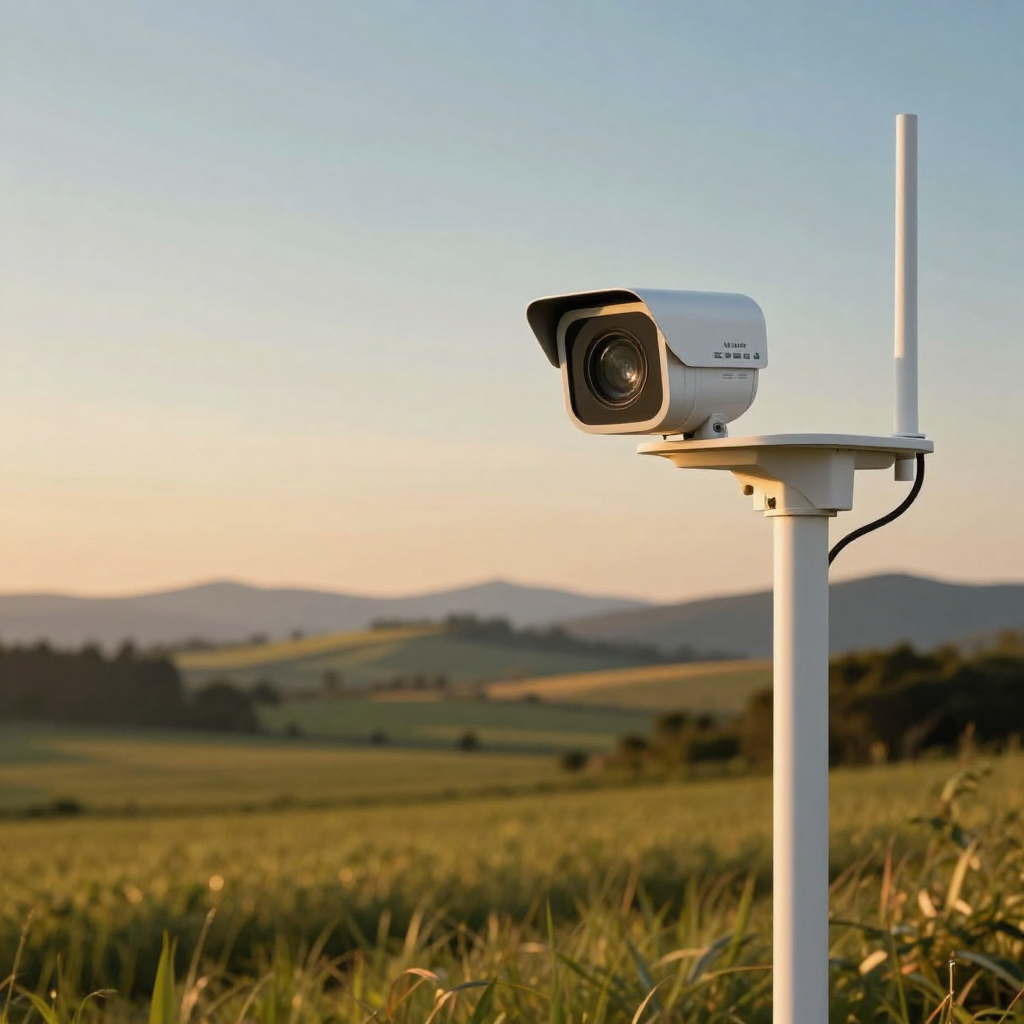
4G Solar CCTV vs WiFi: Best Option for Remote Farms
If you manage a remote farm — for example, an agricultural property many kilometres outside Johannesburg — the choice between a 4G solar CCTV system and a WiFi-connected setup could make all the difference. In this post, we’ll explain how the two differ in coverage, data costs, connectivity, and practical deployment. As a security company based in Roodepoort and Randburg, Accend Security knows how important reliable surveillance is in rural settings.
What is 4G Solar CCTV — and Why It’s Ideal for Remote Areas
4G solar CCTV describes a surveillance camera system that draws its power from a solar panel (with a built-in battery) and connects to the internet through a mobile cellular network (4G / LTE) using a SIM card. Because it relies on solar energy and a mobile network — not mains electricity or a fixed broadband line — this kind of CCTV is ideal for off-grid farms, remote warehouses, gates, and field outbuildings. cctvsa.co.za+2A Top Security Camera Manufacturer+2
Many solar CCTV systems can keep recording even when there’s little sunlight, because they store excess energy in internal batteries. cctvsa.co.za+1
Because the camera connects over 4G, you can receive live video and motion alerts on your smartphone from anywhere that has cellular coverage — even if there’s no landline, router, or local WiFi. V380 Max+2Cosave Power Build & Wholesalers+2
For farms: this means you can watch over gates, livestock enclosures, machinery sheds, or remote outbuildings without wiring or infrastructure.
How WiFi-Connected CCTV Systems Differ
By contrast, a WiFi-connected CCTV system depends on a local internet connection: a broadband line, a router or access point, and a stable WiFi signal radius. The cameras draw power (which can still be solar + battery) but need to stay within the WiFi signal range. A Top Security Camera Manufacturer+1
This works well when you have existing infrastructure — for example, a farmhouse, office, or residential building with broadband and reliable power. It gives fast data transfer and often higher video quality when the network is strong. A Top Security Camera Manufacturer+1
However, for remote or spread-out farm environments (barns, remote gates, open fields), WiFi often fails. WiFi signal range typically is short and doesn’t extend well beyond buildings. For that reason, WiFi CCTV often suits dwellings or consolidated farm-houses rather than widely distributed property components. Farmstream+1
Side-by-Side: Coverage, Data Costs, Connectivity
Coverage / Deployment Flexibility
With 4G solar CCTV, you can place cameras anywhere there’s mobile-network signal — no wiring, router, or infrastructure needed. This gives maximum flexibility for remote farms, gates, remote storerooms, or livestock pens.
WiFi CCTV depends on being within a reliable WiFi signal range. That means cameras often need to stay within a few hundred metres of the router (or within range of WiFi extenders), which limits deployment particularly on large farms. Farmstream+1
Data Costs & Ongoing Connectivity
4G solar CCTV requires a data plan because it uses cellular networks via SIM. Although the monthly data consumption tends to be reasonable (especially if the camera records locally and uploads only when viewed or when motion triggers alerts), you still need data. According to a 2025 guide, typical data use with motion-activated cameras can range from about 500 MB to 2 GB/month. A Top Security Camera Manufacturer+1
WiFi CCTV doesn’t need a separate data plan — it draws on existing internet service. As long as your broadband plan can handle it, there’s no additional cost just for connectivity.
Reliability and Security of Connection
Solar 4G CCTV systems are often standalone and isolated from home or business networks. That reduces certain security risks such as direct network hacking, because the feed goes over the mobile network rather than your local LAN. A Top Security Camera Manufacturer+1
On the other hand, WiFi CCTV depends on router strength and home network reliability. If the broadband or router fails — or if signal strength fluctuates — video quality suffers. Also, WiFi networks may be more exposed to hacking or interference if not properly secured. A Top Security Camera Manufacturer+1
When to Choose 4G Solar CCTV — and When WiFi Makes More Sense
4G solar CCTV shines when:
-
Your farm or property lacks mains power or stable electricity supply
-
You have no broadband internet or router infrastructure on-site
-
You need to monitor remote outbuildings, sheds, gates, fields or assets far from the main house
-
You want a plug-and-play, low-maintenance system that doesn’t require wiring
In contrast, WiFi-connected CCTV is best when:
-
You already have a reliable broadband/internet connection and stable power
-
Cameras remain within a short distance of your router or inside buildings
-
You need higher bandwidth for continuous streaming or high-resolution video
-
You want to avoid mobile-data costs
For many South African farms — especially those outside towns, far from infrastructure, or affected by load-shedding — 4G solar CCTV offers a practical, resilient solution.
Why Accend Security Is Well-Placed to Support Farms & Rural Properties
At Accend Security, we combine solar-power expertise (through our PV Solar Systems offering) with robust CCTV and security services. Accend Security+1
Our solar services (PV solar systems + backup systems) are designed to ensure continuous operation even during power outages — ideal in areas prone to load-shedding or without mains electricity. Accend Security+1
We understand that farms and remote properties need reliable, low-maintenance security setups. Whether you need a single solar CCTV unit for a gate, or a network of cameras guarding barns, equipment sheds, and perimeter fences — we can design and install a system customised to your property, power availability, and connectivity options.
Conclusion
Choosing between 4G solar CCTV and WiFi-connected CCTV comes down to infrastructure, purpose, and location. For remote farms — especially those without power or broadband — 4G solar CCTV offers unmatched flexibility, reliability and independence from local infrastructure. For properties with stable power and good internet — like farmhouses or commercial barns — WiFi CCTV can provide high-bandwidth performance and convenience.
If you’re based around Roodepoort, Randburg, or greater Gauteng and need a security solution tailored for your farm or rural property, contact Accend Security today for a free quote. We can help you pick the right system and ensure seamless installation, so you get reliable surveillance without the headaches.
References
-
Solar CCTV systems convert sunlight into electricity, and store unused energy for cloudy or low-sunlight periods. cctvsa.co.za+1
-
Solar CCTV with 4G connectivity works even when there’s no mains power or internet cables; mobile networks provide the data link. cctvsa.co.za+2Cosave Power Build & Wholesalers+2
-
A 2025 comparison guide outlines how 4G solar cameras and solar WiFi cameras differ in connectivity, deployment location, ongoing cost and typical data usage. A Top Security Camera Manufacturer
-
For rural properties, 4G cameras often record locally and use data only when you view footage — keeping monthly data consumption manageable. Farm
Recent Posts:
- Can Solar CCTV Cameras Withstand South Africa’s Harsh Weather Conditions?
- How Much Does It Cost to Install Solar-Powered CCTV Systems on a 100-Hectare Farm?
- What Are the Best Solar CCTV Brands for South African Farms and Industrial Sites?
- How Do Solar-Powered CCTV Cameras Work During Load-Shedding in South Africa?
- Common Alarm System Mistakes Johannesburg Homeowners