
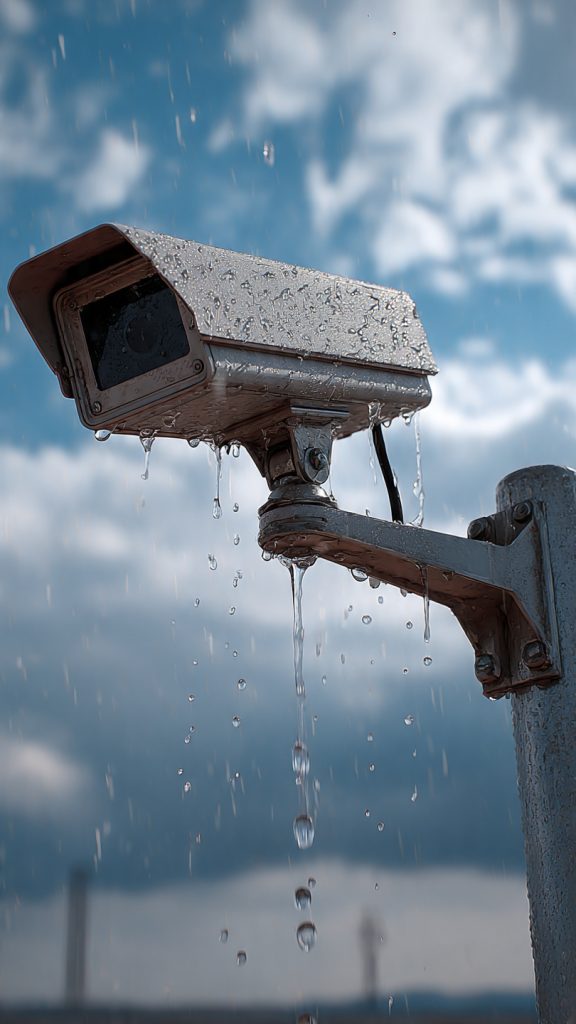
Solar CCTV Durability Guide
Solar CCTV cameras promise resilient, off-grid surveillance — but can they cope with South Africa’s highveld frost, coastal humidity and relentless UV? Short answer: yes — if you choose the right hardware, site the system carefully, and use professional installation and maintenance. Below I explain the technical must-haves, real-world risks, and practical steps property owners in Roodepoort, Randburg and surrounding suburbs should take to get reliable, long-lasting solar CCTV performance.
Why weather ratings matter for solar CCTV cameras
Not all outdoor cameras are equal. Manufacturers rate camera enclosures for dust and water ingress using IP codes (for example, IP66 or IP67). They also publish operating temperature and humidity ranges. Together, these specs tell you whether a camera can survive driving rain, coastal salt spray, midday heat, or winter frost. Check IP and temperature specs before you buy. IEC+1
IP ratings and what they mean for local conditions
An IP66 rating protects against heavy spray and dust. IP67 adds temporary immersion protection. For most South African outdoor sites — suburban yards, commercial perimeters, and rooftop solar mounts — IP66 or IP67 is the minimum you should accept. Coastal sites with salt-laden air need extra corrosion resistance and, when possible, stainless-steel mounts or anti-corrosion coatings. In short, choose cameras with robust IP ratings and corrosion-resistant housings for coastal installs. IEC+1
Temperature tolerance: highveld frost to summer heat
Cameras from mainstream security brands commonly operate from roughly –30°C to +60°C, with many models rated to at least –20°C / +60°C. That covers Johannesburg’s highveld winter nights and hot summers. However, solar camera components (battery packs, charge controllers and enclosures) may have narrower safe temperature windows. Therefore, pair cameras with battery systems rated for the local extremes and place batteries where they avoid direct midday sun and overnight frost. Dahua Technology+1
UV, humidity and salt spray — the hidden killers
UV exposure degrades plastics, seals and cable insulation over time. Coastal humidity and salt accelerate corrosion and can penetrate weak seals. To guard against that, specify UV-stabilised housings, marine-grade fixings, and sealed cable glands. Also, plan for regular inspections — replacing a failing rubber seal early prevents water ingress that would otherwise ruin the camera and void warranties.
Solar components: match panels and batteries to the environment
A reliable solar CCTV system depends on more than the camera. The PV panel, MPPT charge controller, battery chemistry (lead-acid, AGM, or lithium) and the mounting orientation all matter. For high UV and heat, select panels with high-temperature coefficients and batteries rated for high ambient temperatures. For cold winter nights, lithium batteries often perform better than lead-acid; however, they need proper battery management and a temperature-compensated charge controller. Accend Security supplies and installs integrated PV + CCTV systems tailored to Johannesburg suburbs — contact them for a site-specific quote. accendsecurity.co.za+1
Installation choices that improve longevity
First, place cameras under modest eaves where possible; shelters reduce direct sun and rain splash. Second, mount panels at angles that avoid dust build-up and maximise winter sun. Third, use weatherproof conduit and lockable junction boxes placed higher than splash zones. Fourth, choose professional installers who routinely test for water-tightness and lightning protection. Accend Security offers local installations in Roodepoort and Randburg and can advise on the correct balance of panel size, battery capacity and camera model for your site. accendsecurity.co.za+1
Choosing camera models: what specifications to insist on
When you request quotes, insist on these minimums:
-
IP rating: IP66 (suburban) or IP67 (coastal/high-risk areas).
-
Operating temperature: cover at least –20°C to +60°C.
-
IK rating (impact) where vandalism is a risk.
-
Corrosion-resistant mounts for coastal installations.
-
Battery and controller specs matched to local temperature and autonomy needs.
Leading brands publish clear environmental ratings; compare them, and ask suppliers for datasheets. For example, Dahua and Hikvision list operating ranges and IP/IK ratings on their product pages. Dahua Technology+1
Maintenance and warranties: don’t skip them
Even the best solar CCTV camera will fail early if you ignore maintenance. Clean panels quarterly, inspect seals and cable glands annually, and test battery capacity every six months. Also, verify warranty coverage for both camera electronics and PV/battery components. A local installer can include maintenance contracts so you avoid expensive emergency call-outs.
Typical failure modes — and how to prevent them
Corrosion, UV-cracked seals, battery capacity loss, and water ingress top the list. Prevent these by choosing the right IP/temperature ratings, using marine-grade hardware in coastal areas, placing batteries in shaded ventilated boxes, and scheduling routine inspections. Professional installers will factor in lightning protection and surge arrestors to protect electronics from storms.
Conclusion — practical verdict for South African property owners
Solar CCTV cameras can indeed withstand South Africa’s harsh weather when you match equipment to local conditions and rely on professional design and installation. For Roodepoort and Randburg, choose IP66/IP67 cameras, batteries and charge controllers rated for local temperature swings, and corrosion-resistant fittings in coastal zones. Moreover, use a trusted local supplier to size the PV array and battery bank so your system keeps recording through cloudy spells and overnight. Accend Security provides integrated PV + CCTV solutions and can perform a free site assessment tailored to your property’s micro-climate. accendsecurity.co.za+1
If you’d like, I can:
-
Draft a shorter FAQ version for your services page that answers common buyer objections.
-
Create a localised landing page meta description and title tag using the main keyword “Solar CCTV cameras” for Roodepoort/Randburg.
Useful resources and links
-
Accend Security — Home / Services (Accend Security). accendsecurity.co.za
-
Accend Security — PV Solar Systems. accendsecurity.co.za
-
Accend Security — Solar-powered Security Cameras in Johannesburg (load-shedding article). accendsecurity.co.za
-
Accend Security — CCTV System For Home. accendsecurity.co.za
-
Accend Security — Top Brands of Outdoor Security Cameras in South Africa. accendsecurity.co.za
-
IEC — Ingress Protection (IP) ratings (official page on IP codes). IEC
-
Hikvision product environmental specs (example datasheet). Hikvision
Recent Posts:
- How Much Does It Cost to Install Solar-Powered CCTV Systems on a 100-Hectare Farm?
- What Are the Best Solar CCTV Brands for South African Farms and Industrial Sites?
- How Do Solar-Powered CCTV Cameras Work During Load-Shedding in South Africa?
- Common Alarm System Mistakes Johannesburg Homeowners
- Choosing Between Armed Response Companies in Johannesburg for 2025